 caaalmly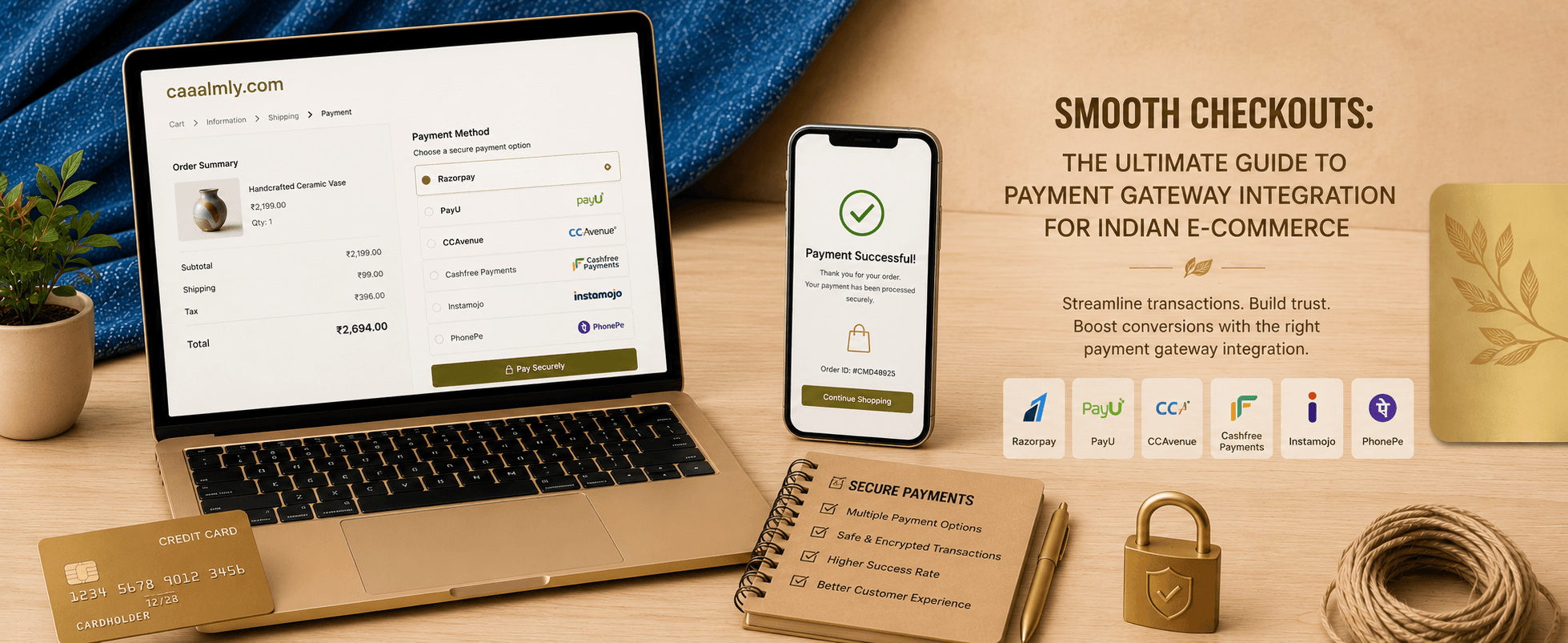
Smooth Checkouts: The Ultimate Guide to Payment Gateway Integration for Indian E-commerce
In the fast-paced world of Indian e-commerce, the "Buy" button is the most critical junction of your business. If your payment process is clunky, slow, or feels untrustworthy, customers will abandon their carts in seconds. For Indian founders, understanding payment gateway integration is not just a technical task—it’s a core part of building a high-converting brand.
What is a Payment Gateway?
Think of a payment gateway as a secure digital tunnel that connects your website to the bank. It encrypts sensitive credit card or UPI information, ensures the customer has enough funds, and moves that money into your business account. In India, a gateway must handle a massive variety of payment methods, from traditional credit cards to the dominant UPI ecosystem.
Best Payment Gateway Options in India
Choosing the right partner is vital for a "Done-For-You" level of efficiency. Here are the top contenders:
- Razorpay: The gold standard for Indian startups. It offers seamless UPI integration, great documentation, and a high success rate for domestic transactions.
- Stripe: Ideal for brands looking to sell globally. While its Indian features are growing, it excels in clean API design and international currency support.
- Cashfree: A strong competitor known for high-speed settlements and robust bulk-payment features.
- PayU: One of the oldest players in the market with deep banking integrations and a wide range of supported local wallets.
Step-by-Step Integration Workflow
A professional setup ensures your "technical plumbing" is leak-proof from day one. Here is the real-world workflow:
- Account Creation & Onboarding: Sign up with your chosen provider and submit your business details.
- API Key Configuration: Generate "Test" and "Live" API keys from the gateway dashboard to link it to your Shopify or WooCommerce store.
- Method Selection: Enable specific payment modes like Google Pay, PhonePe, EMI options, and Credit/Debit cards.
- Sandbox Testing: Run mock transactions to ensure the "Success" and "Failure" pages redirect correctly.
- Go Live: Switch to live mode and conduct a small real-money transaction to verify the settlement flow.
Common Issues & How to Avoid Them
Even with a good provider, technical "fog" can cause issues:
- High Latency: Slow redirect times that cause users to close the window.
- Transaction Drops: Payments that are deducted from the customer but don't show as "Paid" in your store.
- Mobile Responsiveness: A checkout screen that looks broken on a smartphone, which is where most Indian shoppers are.
Compliance: GST and KYC
In India, compliance is non-negotiable. To integrate a gateway, you generally need:
- KYC Documents: PAN card, Aadhaar of the founder, and proof of business registration.
- GST Integration: Your gateway must be configured to handle GST-compliant invoicing so your tax records remain clean.
- Legal Pages: Gateways often require you to have clear "Terms & Conditions," "Refund Policies," and "Privacy Policies" live on your site before approval.
Stop Troubleshooting, Start Selling
Don't let technical hurdles stall your launch. Building a secure, compliant, and high-converting payment flow can take weeks of trial and error if you do it alone.
At Caaalmly, we provide Done-For-You integration support specifically for the Indian market. We handle the documentation, the technical API setup, and the testing, ensuring your store is ready to accept payments the moment you go live.
Ready for a stress-free launch?
Book a Strategy Call with Caaalmly Today and let’s get your revenue flowing.